
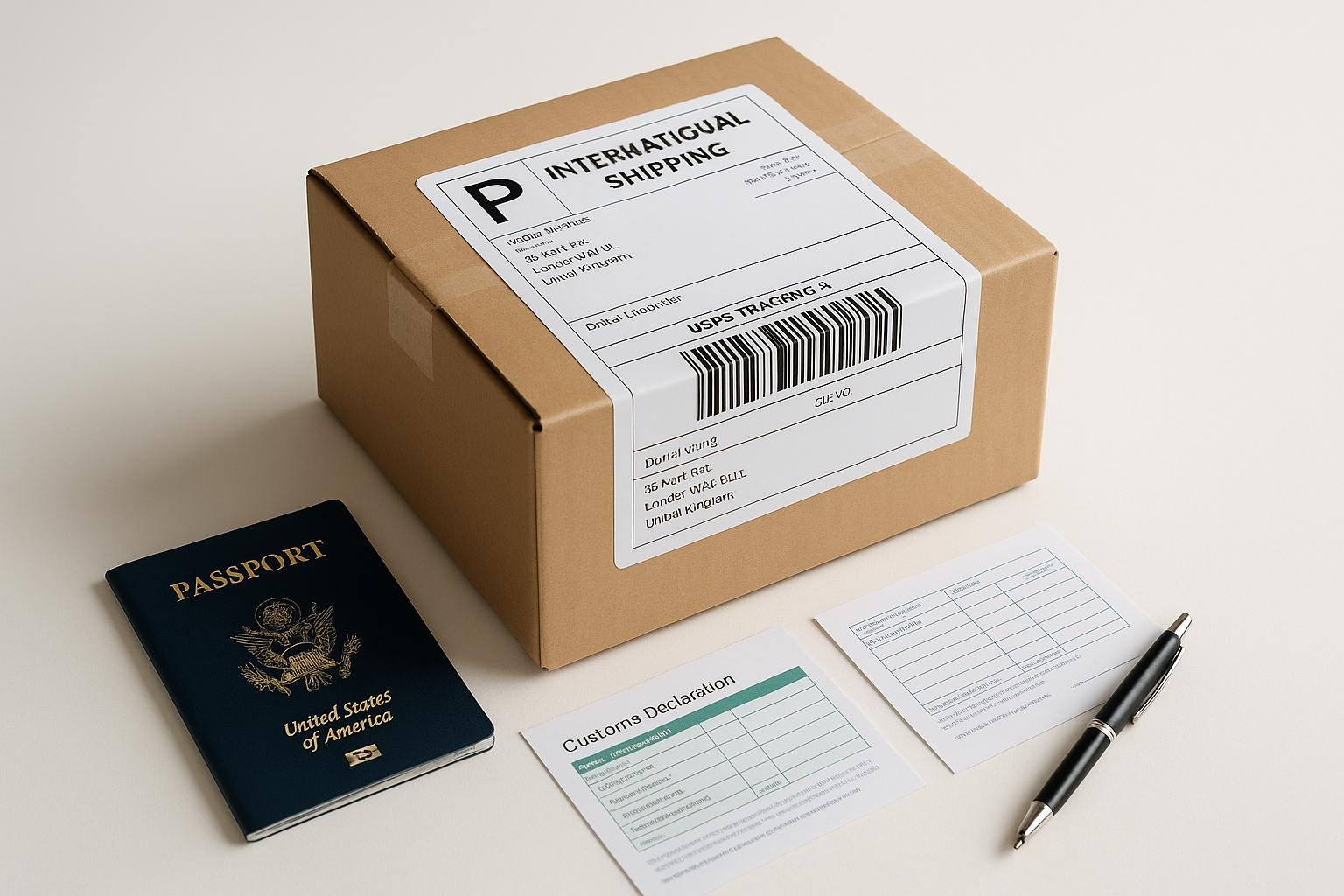
International shipping can be simple when you know the essentials:
- Understand the destination: Customs rules differ by country (e.g., Vietnam vs. Finland).
- Follow key steps: Prepare documents, book transport, clear customs, monitor transit, and ensure final delivery.
- Work with experts: Freight forwarders, customs brokers, and carriers streamline the process.
- Get the paperwork right: Key documents like the commercial invoice, packing list, and certificate of origin are crucial.
- Stay compliant: Use correct Harmonized System (HS) codes and meet customs regulations.
- Choose the right partner: Look for global coverage, transparent pricing, reliable service, and strong technology.
- Use technology: Tools like AI, real-time tracking, and data analytics improve efficiency and reduce costs.
- Control costs: Compare rates, optimize packaging, and plan shipments strategically.
- Reduce risks: Protect against delays, damage, theft, and compliance issues with proper planning and insurance.
If you’re looking for a trusted partner, Globexship offers 29+ years of experience, global reach, and tailored solutions to make international shipping hassle-free.
The 8 Must Haves for International Shipping
International Shipping Basics
Grasping the basics of international shipping can make the process far less intimidating. While it might appear overwhelming at first glance, breaking it down into manageable steps helps simplify the journey. With a solid understanding of these components, you’re better equipped to handle challenges and streamline your shipping operations.
Main Steps in the Shipping Process
International shipping follows a structured sequence, starting long before your package leaves the warehouse and continuing until it reaches its destination. Each step builds on the last, ensuring a smooth flow when done correctly.
- Pre-shipment preparation: This is where it all begins. You’ll need to organize essential documents, classify your goods using international trade codes, and determine the correct customs value. Getting these details right at the outset helps avoid costly delays down the line.
- Booking and pickup: Once your documents are ready, it’s time to book transportation with your selected carrier or freight forwarder. They’ll arrange for pickup and provide tracking details, signaling the start of your shipment’s journey.
- Export customs clearance: At the border of your origin country, customs officials review your paperwork and may inspect your shipment to ensure compliance with export regulations. Companies with strong compliance systems can see clearance times reduced by up to 30%.
- International transit: This is the longest phase, where your goods travel by air, sea, or land to the destination country. Smart route planning, supported by broad network coverage, can cut transit times by as much as 15%. During this stage, tracking tools are critical to monitor progress and address any delays.
- Import customs clearance: Once your shipment reaches the destination country, customs authorities verify your documentation, calculate duties and taxes, and may conduct inspections. This step often requires extra attention to detail.
- Final delivery: The journey concludes with local carriers delivering your goods to their final destination. For remote areas, this may involve multiple handoffs between delivery services.
Each phase of the process depends on skilled professionals to ensure everything runs smoothly, which we’ll explore next.
Key Players in Global Shipping
Behind every successful international shipment is a team of specialists managing each phase. Understanding their roles helps you know who to contact when issues arise and how to build an efficient shipping team.
- Freight forwarders: These professionals oversee the entire shipping process without owning the vehicles or vessels used for transport. Many freight forwarders also operate as non-vessel operating common carriers (NVOCCs). They handle everything from booking carriers and coordinating pickups to managing documentation. As BGI Worldwide Logistics points out, “Choosing a good and experienced freight forwarder can make all the difference”. Effective communication is key, as any miscommunication can disrupt the entire supply chain.
- Customs brokers: Acting as compliance experts, customs brokers navigate the intricate world of international trade regulations. In the U.S. alone, there are roughly 11,000 licensed customs brokers. They help businesses avoid delays, penalties, and legal issues by ensuring all customs requirements are met. When selecting a customs broker, look for accreditation, experience in your industry or region, modern digital tools, and a strong global network.
- Carriers: These are the companies that physically transport your goods by sea, air, or land. Unlike freight forwarders, carriers own and operate the ships, planes, and trucks used to move cargo. Freight carriers typically handle larger shipments and may use multiple modes of transport, while courier services focus on smaller, time-sensitive deliveries. Choosing the right carrier depends on your specific needs, including the type of goods, delivery timelines, and budget.
These three players – freight forwarders, customs brokers, and carriers – work together to create a seamless shipping experience. Freight forwarders coordinate with carriers to arrange transportation, while customs brokers ensure compliance with regulations at every stage. Understanding how they collaborate can help you communicate more effectively and address any issues quickly.
Documentation and Compliance Requirements
Getting the paperwork right is critical for smooth international shipping. Without the proper documentation, even the best-planned shipments can face delays or penalties. Knowing what documents are needed – and why – makes navigating customs much easier.
Required Shipping Documents
Every international shipment needs a set of core documents, though the specifics depend on the type of goods and their destination. These documents are essential for customs to verify and process your shipment.
The commercial invoice is the cornerstone of shipping documentation. It outlines key details about your shipment, including the value, quantity, and Harmonized System (HS) code of the goods. Customs officials rely on this document for import control, duty calculations, and valuation.
Accompanying the invoice is the packing list, which provides a breakdown of the shipment’s contents, specifying items, quantities, and dimensions. This list is vital for freight forwarders, customs authorities, and even banks to ensure everything matches up.
A certificate of origin confirms where your goods were made. This document is often required to determine applicable duties and, in some cases, to qualify for preferential trade agreements.
For certain goods, you might need an export license, which grants permission to ship items that are restricted or have dual-use applications. These licenses are typically necessary for products with security or regulatory constraints.
The Shipper’s Letter of Instruction (SLI) allows you to communicate specific shipping instructions to your freight forwarder, authorizing them to handle your shipment as per your guidelines.
Providing a detailed description of your shipment’s contents is also crucial. Customs officials need specifics – like the material composition, purpose, and exact quantity of each item. Avoid vague descriptions like “machine parts” or “electronics,” as these can trigger additional scrutiny.
To simplify the process, tools like FedEx International Shipping Assist and DHL Express’ MyGTS can help you figure out which documents are required based on your shipment’s details and destination.
| Document | Description | Purpose |
|---|---|---|
| Commercial Invoice | Details the goods, including value, quantity, and HS code | Used by customs for import control, valuation, and duty assessment |
| Packing List | Itemizes shipment contents with quantities and dimensions | Verifies contents for customs, banks, and freight forwarders |
| Certificate of Origin | Confirms the manufacturing country of the goods | Determines duties or qualifies goods for trade benefits |
| Export License | Authorizes export of restricted items | Required for goods with security restrictions or dual-use applications |
| Shipper’s Letter of Instruction | Provides handling instructions to the freight forwarder | Authorizes and directs the forwarder’s actions |
Once you’ve got your documents in order, the next step is ensuring compliance with customs regulations.
How to Meet Customs Regulations
Proper documentation is just the start – compliance with customs regulations is equally important. Since these rules vary by country, understanding both the origin and destination requirements is essential.
Using accurate Harmonized System (HS) codes is a must. These codes classify goods for customs purposes, determining duty rates and any import restrictions. Misclassifying items can lead to delays or fines, so double-check the correct classification or consult a customs broker if needed.
Submitting customs documentation electronically can save time and reduce errors. For example, in the United States, shipments containing a single item valued over $2,500 often require Electronic Export Information (EEI) submissions. Automation tools can streamline this process, complementing the shipping tools mentioned earlier.
Training your team on customs procedures is another key step. Make sure they understand documentation requirements, HS codes, and the importance of accuracy in all paperwork. Mistakes can be costly, both in time and money.
It’s also important to stay updated on changing regulations. Trade agreements, tariffs, and restrictions can shift frequently. To keep up, subscribe to updates from customs authorities, collaborate with experienced customs brokers, or join trade organizations that provide insights on regulatory changes.
If issues arise, address them quickly and professionally. Keep detailed records of all communications and documents to resolve disputes efficiently. Using digital document management systems can help organize and store records, making audits or inquiries much easier to handle.
How to Choose the Right Shipping Partner
Once you’ve mastered the essentials of documentation and compliance, the next big step is finding the right shipping partner. The choice of partner can make or break your international shipping process. A good partner ensures smooth operations, while a poor one can lead to costly delays and unexpected fees.
What to Look for in Shipping Providers
When evaluating shipping providers, focus on these key factors:
- Global Reach and Network Coverage: Ensure the carrier has a strong presence in your target markets and experience navigating customs in those regions. A provider with limited coverage could hinder your ability to expand seamlessly.
- Pricing Transparency: Hidden fees can add up quickly. Look beyond the base shipping cost and ask for a detailed breakdown of potential charges, including customs brokerage fees, remote area surcharges, and duties. Comparing rates from multiple carriers can help you avoid surprises.
- Service Reliability: Consistent on-time deliveries and minimal lost shipments are non-negotiable. Ask for performance metrics and references from businesses in your industry to gauge reliability.
- Technology Integration: Modern shipping relies heavily on technology. Choose a partner that offers real-time tracking, alerts, and systems that integrate with your existing platforms. These tools can save both time and money by optimizing operations.
- Customer Support Quality: Problems happen, and when they do, you’ll want responsive support. Look for carriers offering 24/7 assistance, multiple contact options, and local support teams in key regions. Understanding their claims process upfront can also prevent future headaches.
- Customs Expertise: For international shipping, customs knowledge is a must. Your partner should provide guidance on HS codes, duty classifications, and ever-changing regulations to keep your shipments compliant.
Here’s a quick comparison table to help you evaluate potential providers:
| Evaluation Criteria | What to Look For | Questions to Ask |
|---|---|---|
| Global Coverage | Direct service to target markets; customs expertise | Do you cover my key regions? How experienced are you with customs in those areas? |
| Pricing Structure | Transparent fees; volume discounts | What additional fees might I face? Do you offer discounts for bulk shipments? |
| Technology | Real-time tracking; system compatibility | Can your tools integrate with my current systems? What tracking features do you provide? |
| Support | 24/7 availability; local expertise | How quickly do you resolve issues? Is local support available in my target markets? |
Why Globexship is an Ideal Choice
Globexship stands out as a trusted shipping partner, offering over 29 years of experience and a network that spans more than 220 countries. With their extensive global reach, you can ship confidently to virtually any destination.
Comprehensive Service Options: Globexship provides a range of solutions tailored to your needs. Whether it’s express door-to-door service for urgent shipments, full cargo services for larger volumes, or specialized handling for sensitive goods like pharmaceuticals, they’ve got you covered. Their pricing structure – offering economy, express, and standard options – lets you balance cost and delivery speed based on your priorities.
Regional Expertise: Globexship excels in navigating challenging markets. For example, they are one of the few carriers capable of shipping to Iran from the USA, a route that demands deep regulatory knowledge and a robust logistics network.
End-to-End Logistics Support: From packaging and pickup to delivery and documentation, Globexship manages every step of the process. Their warehousing and storage services add flexibility, making it easier to handle inventory across multiple markets without juggling multiple vendors.
Multi-Modal Shipping Capabilities: Globexship offers air, ocean, and road freight options, ensuring they can recommend the most efficient and cost-effective route for your shipments. Their quality control measures help reduce delays and safeguard your goods during transit.
Choosing Globexship means partnering with a provider that combines global reach, tailored services, and a deep understanding of logistics to meet your shipping needs.
sbb-itb-6a842af
Using Technology to Improve Shipping Efficiency
Modern technology is transforming international shipping by replacing outdated, paper-heavy methods with efficient digital operations. With tools like data analytics and AI, the logistics industry is shifting from reactive approaches to predictive systems, simplifying global shipment management.
AI integration has proven to be a game-changer, cutting logistics costs by up to 15%, improving inventory management by 35%, and boosting service levels by 65%. This digital transformation has introduced advanced tools that continue to refine and enhance shipping processes.
Automated Tools for Better Shipping
Real-time tracking systems are now at the heart of shipping efficiency. Technologies like GPS, RFID tags, IoT sensors, and blockchain provide end-to-end visibility across the shipping journey. For instance, the global GPS tracking device market was valued at $3.1 billion in 2023 and is expected to grow to $5.7 billion by 2028.
Digital tracking solutions provide critical insights into vessel locations, cargo status, and operational metrics. Companies like Maersk and MSC have successfully adopted GPS technology to optimize their shipping routes and improve operations. These tools help anticipate delays and adjust plans to ensure on-time deliveries. Interestingly, 70% of American consumers prefer accessing tracking updates rather than contacting customer service when faced with shipment delays.
AI-powered logistics platforms take automation even further. By using machine learning, these systems predict optimal shipping routes and manage cargo loads more effectively. They analyze historical and real-time data to identify patterns, foresee potential issues, and recommend proactive solutions. The introduction of 5G has also enhanced container tracking and IoT connectivity – an essential improvement, given that about 90% of global goods are transported in shipping containers.
Tracking systems are just one part of the puzzle. The real power lies in using data to make smarter logistics decisions.
Using Data to Make Better Logistics Decisions
Data analytics turns raw shipping information into actionable insights. AI-driven route optimization combines real-time data, predictive analytics, and machine learning to create delivery routes that reduce travel distances, cut fuel consumption, and improve delivery times.
In today’s competitive market, data-driven decision-making is no longer optional. According to McKinsey, over 90% of U.S. online shoppers expect free shipping within two to three days, and more than half will switch to another retailer if delivery times are too long. Dynamic rerouting capabilities allow AI systems to respond quickly to real-time events, adapt routes on the fly, and learn from past experiences to improve future outcomes.
Predictive analytics also plays a key role in making proactive decisions. More than 80% of logistics companies plan to adopt IoT for real-time tracking, inventory management, and loss prevention. This approach enables the creation of centralized data repositories, or “data lakes”, that provide a clearer view of operations. For AI route optimization to be effective, companies need clear goals, regular updates to algorithms, and continuous monitoring of key performance indicators (KPIs).
One company embracing these advancements is Globexship. Operating in over 220 countries, it uses AI-powered route optimization and real-time tracking to manage its multi-modal shipping network, which includes air, ocean, and road freight. These technologies help maintain quality control, minimize delays, and protect goods throughout their journey.
How to Control Costs and Reduce Risks
Managing shipping costs and minimizing risks requires a careful balance between efficiency and protection. Starting in 2025, a universal 10% tariff will apply to most imports, with some Chinese goods facing tariffs as high as 145%. Additionally, the de minimis threshold for packages under $800 will be eliminated.
Ways to Control Shipping Costs
To keep shipping expenses in check, consider these strategies:
Compare rates from multiple carriers. Cynthia Asije, CEO & Cofounder at Craftmerce, highlights the importance of shopping around:
“When shipping internationally, the best tips for keeping costs low include comparing pricing for international shipping with various carrier services such as USPS, FedEx, UPS, and DHL. This will help you determine the best options for shipping.”
Businesses that negotiate strategically with carriers often see transportation costs drop by 10% to 20%. For smaller companies that lack the volume to negotiate directly, partnering with a fulfillment company can help take advantage of pre-negotiated rates.
Streamline packaging and consolidate shipments. Reducing dimensional weight charges and maximizing container space can cut costs by up to 20%. Shanna Bynes Bradford, CEO of Grow Out Oils Clinical Aromatherapy Company, emphasizes the role of smart packaging:
“Keep in mind that packaging can increase the weight of an item, so it’s essential to customize packaging accordingly to ensure it is securely wrapped and ready to go. Use lightweight materials when possible, and consider flat-rate shipping options if they are available, as these can sometimes offer significant savings.”
For smaller shipments, Less than Container Load (LCL) shipping provides a cost-effective alternative to full container loads.
Take advantage of free trade agreements. These agreements can significantly lower tariff costs, but staying informed about current and upcoming agreements is key. Ensure all documentation is in order to claim benefits.
Conduct regular freight audits. Automated audits can reduce the time spent resolving billing errors by over 60%. They also help uncover hidden costs and ensure you’re only charged for services received.
Plan shipments strategically. Align shipping schedules with sales forecasts and seasonal trends to avoid peak shipping periods when rates spike. Expedited shipping can cost two to three times more than standard delivery, so careful planning is essential to avoid unnecessary expenses.
While cost control is crucial, managing risks is equally important to ensure smooth operations.
How to Reduce Shipping Risks
Shipping internationally involves various risks that can impact both costs and customer satisfaction. Identifying these risks and implementing strategies to address them helps protect your business from unexpected setbacks.
| Risk | Description | Tools for Managing Risk |
|---|---|---|
| Physical Damage | Damage during loading, unloading, or due to weather | Cargo insurance, quality checks, proper packing |
| Delays at Ports | Congestion, strikes, or regulatory issues causing delays | Advance planning, experienced agents, real-time tracking |
| Legal and Regulatory Risks | Compliance issues, document errors, or legal changes | Regulatory knowledge, consultants, document control |
| Theft and Loss | Goods stolen or lost during transit | Theft insurance, reliable forwarders, continuous tracking |
| Human and Operational Errors | Mistakes in documentation, labeling, or coordination | Employee training, quality control, process improvements |
Build strong shipping partnerships. Working with experienced logistics partners not only ensures smoother operations but can also lead to better rates and services over time.
Invest in cargo insurance. Third-party policies often provide better value and can cover the full value of your shipment, including replacement costs and business interruption expenses.
Adopt robust packaging standards. Use moisture-resistant materials, shock-proof padding, tamper-proof seals, and clear handling instructions to minimize damage claims and costs. For fragile or high-value items, include shock and vibration indicators.
Diversify your shipping routes. Alternate routes can help avoid disruptions caused by geopolitical issues, natural disasters, or port congestion. This flexibility ensures deliveries stay on track even when primary routes are compromised.
Stay informed about customs regulations. Work with expert customs brokers to navigate complex requirements and avoid compliance issues. Research prohibited items, labeling standards, and safety regulations for each destination.
Use real-time tracking tools. Advanced tracking systems provide visibility throughout the shipping process, allowing you to address potential issues proactively. As Bradford explains:
“Maintain clear communication with your customers about shipping times, especially since international shipments can take longer due to customs processing.”
Prepare contingency plans. Be ready for disruptions with backup suppliers, alternative shipping routes, and emergency procedures. Monitor weather patterns and geopolitical developments to stay ahead of potential challenges.
Conclusion: Making International Shipping Easy with Globexship
Navigating international shipping doesn’t have to be complicated, especially with a reliable partner like Globexship. This guide has outlined the essential aspects of logistics – everything from managing documentation to keeping costs under control. Globexship brings these elements together with its efficient and compliance-focused services.
With nearly three decades of experience, operations in over 220 countries, and a track record of 439,000+ satisfied clients, Globexship transforms logistical hurdles into seamless solutions.
What truly sets Globexship apart is its personalized approach. Victoria Meyler shares her experience:
“Anahita and Tony are highly professional specialists in the local and international expedited deliveries. They are above and beyond in customer service providing personalized attention and client-focused service to each client. I strongly recommend effective company Globex Logistics International Inc”
Globexship offers comprehensive services, including air and sea freight, real-time tracking, and specialized options like refrigerated medication transport.
Real-world success stories highlight Globexship’s reliability. For instance, Shahrooz Art‘s urgent medication shipment and Anna Marie Piersimoni’s 6-day document delivery to Iran showcase how Globexship efficiently handles even the most complex scenarios.
If you’re ready to make international shipping hassle-free, Globexship combines regulatory know-how, cost-efficient solutions, and advanced tracking to deliver a complete logistics package. Reach out to Globexship today and experience personalized, proven solutions for your global shipping needs.
FAQs
What should I look for when choosing an international shipping partner?
When choosing an international shipping partner, there are a few critical aspects to keep in mind to ensure your deliveries go off without a hitch. First, make sure the company understands customs regulations and compliance rules for your destination countries. This knowledge can help you dodge unnecessary delays and surprise fees.
Next, assess their reliability and experience with international logistics. A strong partner should have a solid track record managing shipments via air and sea, and they should also offer cost-efficient options like shipment consolidation to keep expenses in check.
Lastly, prioritize partners who provide clear communication, robust documentation support, and access to technology tools for shipment tracking and management. The right shipping partner can streamline the entire process, save you valuable time and money, and ensure your goods arrive safely and on schedule.
How can businesses use technology to make international shipping faster and more cost-effective?
Technology has transformed international shipping, making it faster, more accurate, and cost-effective. Take automation, for example – it takes over tasks like managing customs paperwork and ensuring compliance with trade laws. By cutting down on manual errors and speeding up processing times, automation helps shipments glide through customs while staying aligned with global regulations.
Then there’s real-time tracking. Tools like GPS and IoT devices give businesses a clear view of their shipments’ journey. This not only allows companies to share precise delivery updates with customers but also fosters trust and makes it easier to address any hiccups along the way. With these advancements, businesses can simplify their processes, minimize unnecessary expenses, and make international shipping smoother and more dependable.
How can I ensure compliance with customs regulations when shipping internationally?
Navigating Customs Regulations for International Shipping
When shipping goods internationally, staying on top of customs regulations is a must. It starts with understanding the rules of your destination country – things like restrictions on certain products and the required documentation. This might include commercial invoices, packing lists, and bills of lading. Double-check that all your paperwork is accurate and complete; mistakes can lead to delays or even penalties.
Another key factor is using the correct Harmonized System (HS) codes for your products. These codes ensure proper classification, helping you avoid fines and unnecessary complications. If customs regulations feel overwhelming, teaming up with a skilled customs broker can make a world of difference. They can guide you through the process and handle the nitty-gritty details.
Finally, consider using technology to make things smoother. Automated tools for managing documents and tracking shipments in real time can save you time and reduce errors. These tools help ensure you meet all customs requirements without a hitch.
